
Nausea on Ozempic — What to Eat (and What to Avoid) to Feel Better

Nausea on Ozempic — What to Eat (and What to Avoid) to Feel Better
Nausea is the most commonly reported side effect of Ozempic, Wegovy and other GLP-1 medications. If you are in the early weeks of your medication and struggling to eat without feeling sick, you are not alone. For most people it improves significantly after the first few weeks as the body adjusts. And in the meantime, what you eat makes a real difference to how you feel.
This is not about pushing through or eating less. It is about eating smarter. A few targeted changes to what you eat, when you eat, and how you eat can meaningfully reduce nausea and make the adjustment phase much more manageable.
Why does Ozempic cause nausea?
GLP-1 medications work by slowing down gastric emptying. That means food moves through your stomach and into your small intestine more slowly than usual. This is part of how the medication creates that sensation of fullness and reduces appetite. The trade-off, particularly in the early weeks, is that a stomach that empties slowly is also more prone to feeling overfull, uncomfortable and nauseous.
The nausea tends to be worse after larger meals, fatty or rich foods, and eating too quickly. All three of these put more load on a digestive system that is already working at a reduced pace. Understanding this mechanism makes the dietary strategies below a lot more intuitive. You are not following arbitrary rules. You are working with the physiology of what the medication is doing to your digestion.
The good news is that most people find nausea improves substantially after the first four to six weeks, and particularly after dose stabilisation. If your nausea is severe, persistent, or preventing you from eating adequately, speak with your GP.
Foods that tend to help
When nausea is significant, the goal shifts slightly. You are not aiming for nutritional perfection at every meal. You are aiming for foods that are easy on a slow stomach, gentle enough to tolerate, and still nutritionally useful when you do manage to eat.
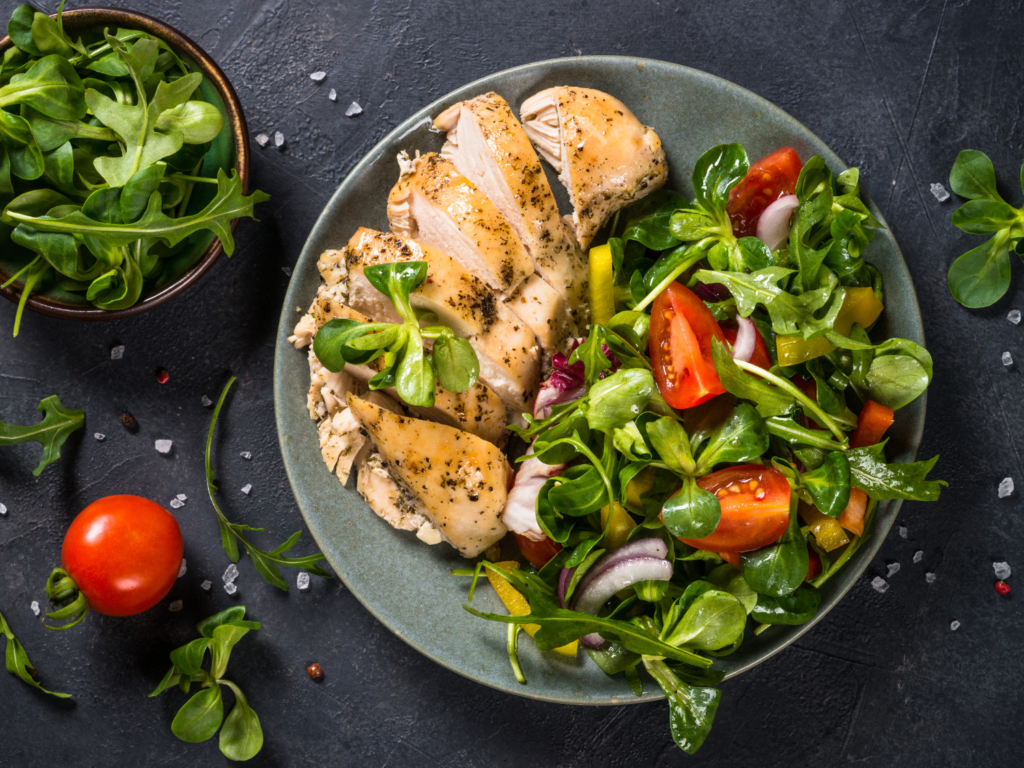
Plain, low-fat protein sources Protein remains critical even on nausea days. The key is choosing versions that are easy to digest. Scrambled or poached eggs, plain boiled chicken breast, tinned tuna in springwater, Greek yoghurt, and cottage cheese all work well. They are mild in flavour, low in fat, and easy to prepare in small amounts.
Bland, easy-to-tolerate carbohydrates Plain crackers, dry toast, plain rice, and plain oats are all useful during high-nausea periods. They are not the most nutritionally dense options, but they provide fuel, are gentle on the stomach, and give you a base to build from when appetite allows.
Cooked vegetables over raw Raw vegetables can be harder to digest and more likely to trigger discomfort when digestion is sluggish. Steamed or roasted vegetables are gentler. Zucchini, carrot, sweet potato, pumpkin and spinach are all well tolerated by most people.
Cold or room-temperature foods Hot food has a stronger smell, which can amplify nausea. Cold or room-temperature options like yoghurt, crackers with cottage cheese, a small salad with plain protein, or chilled fruit are often better tolerated than hot meals on difficult days.
Ginger Ginger has reasonable evidence behind it for nausea reduction. Fresh ginger in warm water, ginger tea, or small amounts of crystallised ginger can help. It is not a cure, but it is a safe and practical option worth trying.
Small, frequent eating Rather than three meals, think five or six small eating occasions. A few crackers with cottage cheese. A small serve of yoghurt. Half a piece of toast with egg. An empty stomach can actually worsen nausea, so eating something small every two to three hours tends to work better than waiting for hunger that may not arrive.
Foods that tend to make nausea worse
High-fat and fried foods Fatty food slows gastric emptying further, which is the last thing you need when digestion is already sluggish. This means fried food, very fatty cuts of meat, full-fat cream sauces, pastry, and anything deep-fried are best avoided, particularly in the early weeks of medication. This is often the single most impactful change people can make.
Spicy food Spice can irritate an already sensitive stomach and worsen both nausea and reflux. If you normally eat a lot of spicy food, a temporary reduction during the early adjustment phase is worth trying.
Very large portions A stomach that empties slowly cannot handle large meals the way it used to. Eating the same portion sizes as before starting medication is a common cause of nausea and discomfort. Smaller portions, eaten more slowly, are far easier to manage.
Strong smells and heavily seasoned food Smell sensitivity increases for many people when they are nauseous. Strongly flavoured dishes, cooking smells, and heavily seasoned food can all trigger or worsen nausea in ways they would not have before medication. Mild, simply prepared food is often better tolerated during this phase.
Carbonated drinks Sparkling water and fizzy drinks can increase bloating and gas in a slow-moving digestive system, which amplifies discomfort. Plain water or herbal tea are generally better options.
Alcohol Alcohol slows digestion further, irritates the stomach lining, and is calorically empty. Many people find their tolerance changes significantly on GLP-1 medications. Best avoided, particularly when nausea is active.
Meal timing and eating habits that reduce nausea
What you eat matters. So does how and when you eat.
Eat slowly. This is one of the most consistently useful habits on GLP-1 medication and particularly important when nausea is present. Eating quickly overloads a stomach that cannot empty at its usual pace. Put your utensils down between bites. Take breaks. Give your body time to register what is happening before you add more.
Sit upright during and after eating. Lying down or slouching after a meal slows gastric emptying further and increases the risk of reflux. Staying upright for at least 30 minutes after eating helps food move through more comfortably.
Do not eat to fullness. On GLP-1 medications, the old signals of fullness have changed. Stopping at 70 to 80 percent of what would previously have felt like a complete meal is a practical starting point. If you eat to the point of feeling full in the old sense, you have likely eaten too much for a stomach that empties slowly.
Stay hydrated, but not at meals. Drinking large amounts of fluid during a meal adds volume to an already-slow stomach. Sip water steadily throughout the day rather than drinking large amounts alongside food. Herbal teas and warm water with ginger are also useful between meals.
Time your largest eating occasion carefully. Many people find nausea is worse in the mornings and improves as the day goes on. If that is your pattern, a lighter breakfast and a slightly larger lunch or early dinner may suit you better than the traditional three-equal-meals approach.
When nausea is not just nausea
Most GLP-1-related nausea is manageable with the strategies above and improves over time. There are situations, however, where it warrants a conversation with your GP.
Speak with your doctor if your nausea is severe and not improving after the first few weeks at a stable dose. If you are vomiting regularly, unable to keep food or fluid down, losing weight faster than expected, or experiencing significant abdominal pain alongside nausea, these are signs that need medical attention rather than dietary adjustment.
Your GP may consider a slower dose titration, a different medication, or further investigation if symptoms are not settling. Dietary strategies are a meaningful support, but they are not a substitute for medical review when nausea is severe.
Getting personalised support
Managing nausea on GLP-1 medication is genuinely more complex than most people expect. The right eating pattern looks different depending on your dose, your stage of treatment, your food preferences, and the other symptoms you are managing alongside nausea.
If you are struggling to eat enough protein because nausea is making food difficult, that is a real concern worth addressing. Protein deficiency in the early weeks of GLP-1 treatment accelerates muscle loss, which creates longer-term problems that are harder to reverse. Our post on muscle loss on GLP-1 medications covers why this matters and what to prioritise even on difficult eating days.
Our team of Accredited Practising Dietitians works with GLP-1 patients across Brisbane and via telehealth anywhere in Australia. A consultation gives you a personalised side effect management plan built around your specific medication, dose, and eating patterns.
Frequently asked questions
What foods help with nausea on Ozempic?
Foods that tend to be best tolerated when nausea is present on Ozempic include plain, low-fat protein sources such as eggs, boiled chicken, Greek yoghurt and tinned tuna, bland carbohydrates like plain crackers, dry toast and plain rice, cooked vegetables rather than raw, and cold or room-temperature options rather than hot meals. Small, frequent eating occasions of two to three hours apart also help by preventing the stomach from becoming empty, which can worsen nausea.
What makes nausea worse on Ozempic?
The foods most commonly associated with worsening nausea on Ozempic are high-fat and fried foods, spicy food, very large portions, strongly seasoned or heavily smelling dishes, carbonated drinks, and alcohol. All of these put additional load on a digestive system that is already emptying more slowly due to the medication.
How long does nausea on Ozempic last?
Building new muscle while in a significant calorie deficit is difficult, but maintaining your existing muscle mass is very achievable with the right approach. The combination of adequate protein intake (1.2 to 1.6 grams per kilogram of body weight) and regular resistance exercise is the most effective strategy. For most people on GLP-1 medications, the realistic goal is muscle preservation rather than muscle gain, and that is a worthwhile and achievable target.
Can I eat normally on Ozempic?
Eating normally in the sense of large, rich or fatty meals often becomes uncomfortable on Ozempic because the medication significantly slows gastric emptying. Most people find they naturally shift toward smaller, simpler meals. While there are no foods that are strictly forbidden, high-fat, spicy, and very large serves consistently make nausea worse for most people on GLP-1 medications. For general guidance on building a well-balanced eating pattern alongside the medication, see our guide to what to eat on Ozempic.
The information in this post is general in nature and does not replace personalised dietary advice. If you have specific health concerns, persistent or severe nausea, or are unable to eat adequately, please speak with your GP or an Accredited Practising Dietitian.